

REAL-DATA LAYER
Separate the starter, the quality range, and the community signal
Player reports and official facts are labelled separately. Where a Hunter-level sample is missing, this page does not invent a single certain answer.
Steam player report: projectile count is the real ceiling signal
A launch review describes successful runs around extra projectiles, Fire Rate, and Reload Speed, including an Acid setup reported at 6–8 projectiles and 0% condensed spread. The review uses the names “Skorpian” and “Leaf Cutter”; those names are not present in the current official catalog, so the site keeps the mechanic signal and does not hard-map them to a current weapon ID.
Read the Steam player review ↗Steam demo feedback: keep a working gun, dismantle misses
A player report says dismantling guns and parts returns upgrade tokens, and that they usually keep a gun that already works instead of switching just because a new drop is rarer. That is a useful rule for the in-run decision layer, not proof that the starter weapon is the best weapon.
Read the Steam discussion ↗Official 1.0.487: Training Room and Item Encyclopedia
The 1.0.487 Steam update added a Training Room for freely testing builds and an Item Encyclopedia. The site points players to the exact in-game verification step instead of presenting an untested weapon family as a measured tier-list winner.
Read the official Steam update ↗Current conclusion: the public data supports a projectile / fire-rate / reload direction, but not a reliable seven-Hunter weapon ranking yet. A family name also does not mean the drop is Legendary or Mythic; check the quality range and the current affixes on the item page.
COMMUNITY FIELD SIGNALS
Use player discussion as route evidence, not a fake tier list
Routes, decisions, and pain points stay separate. Each card shows its source, version status, and how the site uses it. A single player's result does not directly change Planner rankings.
Steam report: projectile count, Fire Rate, and Reload Speed
A high-rated Steam review describes a successful Acid run around extra projectiles, Fire Rate, and Reload Speed, reporting 6–8 projectiles and 0% condensed spread. The weapon names in that review do not map cleanly to this site's current 45-family catalog, so we retain the event pattern, not the item ranking.
How the site uses it: Use this as a projectile/reload hypothesis. Check the current family, quality, and room coverage in the Training Room before calling any weapon a best pick.
Steam decision signal: keep the gun that already works
A demo discussion describes dismantling guns and parts for upgrade resources, while advising players to keep a working gun instead of switching only because a new drop is rarer. It is a useful decision heuristic, not proof that the starter copy is the best weapon.
How the site uses it: Treat rarity as a tie-breaker. Switch when the new drop fixes reload downtime, room coverage, or a broken element—not when its color is simply brighter.
Official Update 8.20: current pet, co-op, and Lightning interaction fixes
This is the current bug-fix layer. It does not replace the V1.0.499 Frost balance baseline from the previous day.
How the site uses it: Use the current item data, then retest only the three fixed interactions when they appear in co-op, inventory, or Lightning routes.
Official Update 8.19: Pet system and Frost Relic rework
Old Frost descriptions and any recommendation built around the former Ice Pillar, Heart of the Storm, or Flash-Freeze Round behavior are obsolete.
How the site uses it: Prepare Armor before combat, use the refreshed official item text, and keep route ranking claims behind repeatable run tests.
Official Update 8.7: Arrow Rain, resolution, and Steam Deck fixes
The official 1.0.491 announcement is a bug-fix hotfix. It supports carrying forward current Build routes while keeping the three fixes visible on the patch page.
How the site uses it: Keep the current Build recommendations and Planner logic unchanged, then retest Arrow Rain, affected resolutions, and Steam Deck presentation after the update.
Official Update 8.6: three bugs fixed, no Build rebalance listed
The official Steam Update 8.6 announcement lists fixes for Auto Dismantle, controller Item Encyclopedia navigation, and an occasional backwards weapon on the results screen. It does not list Build balance changes.
How the site uses it: Keep the 1.0.487 Build recommendations and Planner logic unchanged. Use the 1.0.488 patch page for the three system, quality-of-life, and presentation fixes.
TapTap player route: Physical / Bleed one-shot claims
A TapTap post presents a Physical/Bleed route as a fast-kill direction and claims that, after an update, most bosses can be one-shot in a lucky or completed run. It is an anecdotal outcome, not a measured sample or a promise for every Hunter.
How the site uses it: Keep the route as a community experiment: build Physical/Bleed when the early triggers arrive, but retain a room-clear fallback and downgrade the claim after a patch changes Bleed or Final Shot.
Chinese guide candidate: Lightning / Disruption package
A Chinese guide ranks Thunder Bow and Railgun as Lightning anchors, then names Battery and several Lightning weapon parts as the package to try. It frames frequent hits and Disruption as the beginner-readable loop, but the tier labels are the author's judgment and the article does not establish a current public test sample.
How the site uses it: Use the named package as a candidate route in the Planner, then verify element coherence, Disruption uptime, and boss damage in the current Training Room. Do not import its tier labels into the site ranking.
Practical weapon tier list
This is a practical snapshot, not a universal DPS ranking. The game has no public damage-testing dummy, so the tiers use build fit, room coverage, boss pressure, and reliability instead of invented numbers. S means the weapon is a reliable anchor for a clear route; A is strong with the right Hunter or element; B is conditional and should not replace a working engine without a reason.
Judge a drop in ten seconds
Weapon rooms are a timed decision, not a research project. The useful question is not whether the weapon is good in isolation, but whether it produces the events your build already pays off. Run these four checks in order.
- Element first. Does it build the Transmutation your relics and Tarot already reference? Switching element resets that progress, which is a real cost that never appears on the item card.
- Shot frequency second. Builds that trigger on firing, reloading, first shot, or last shot care about how often the event happens, not how large one number is.
- Effect third. Read what the weapon effect actually does. A weapon whose effect nothing in your run references is a statline with extra steps.
- Rarity last, if at all. A higher-rarity gun in the wrong element is usually a downgrade for a committed build.
If you want to test a combination before committing a run, the build planner scores element coherence and flags conflicts without inventing damage numbers. Open the Planner
Best weapon by Hunter
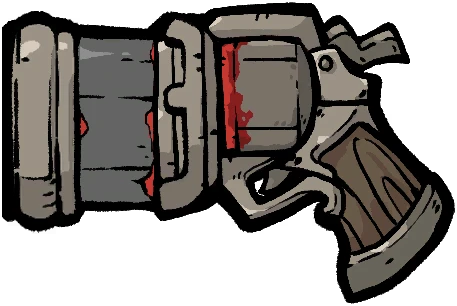
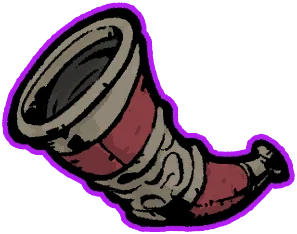
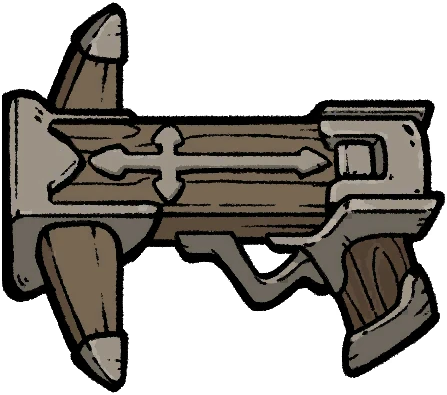
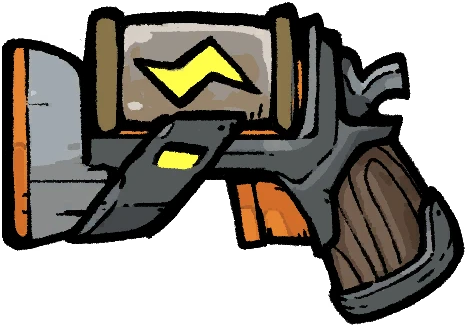
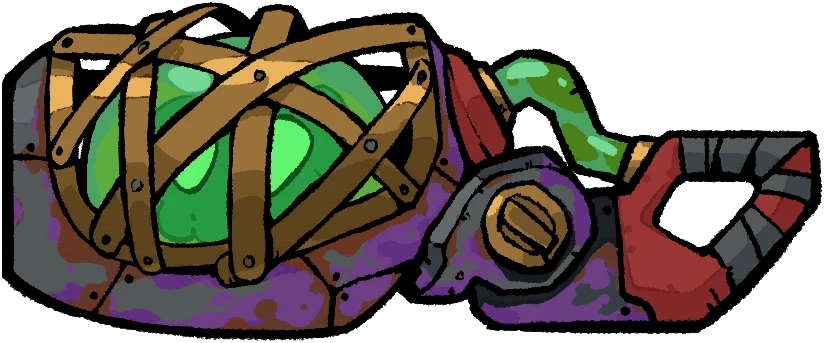
Three non-starter weapon anchors
The release includes 45 weapon families. These three are practical comparison anchors, not a final tier list. The guaranteed starter weapon is documented separately as an opening fallback.
All three anchors use local official artwork from the 1.0.503 Steam snapshot.
A current weapon also carries the element that several Hunter skills read from. Replacing it can silently disconnect half a kit. This is the most common way a promising run degrades without the player noticing.
Element commitment and Transmutation
Each element builds one Transmutation: Physical→Hemorrhage, Frost→Freeze, Lightning→Disruption, Acid→Corrosion, Fire→Ignition. This mapping is why best weapon is the wrong question in isolation.
Pick an element early, then treat every later weapon offer as a question about whether it is worth abandoning that progress. When the run refuses to offer your element, reload speed, fire rate, and survival support are more honest than starting a second engine. Long Tong is the clearest example.
How to read this practical tier list
The tiers combine build compatibility, room coverage, boss usefulness, and reliability. They do not claim universal damage numbers. If a weapon is already producing the events your relics and Hunter pay off, keep it even when a table places another weapon higher.
Why there is no weapon parts list either
The release includes 45 weapon parts. For any part whose full effect text or stacking rule is unclear, follow the current in-game tooltip before building around it. The reliable decision order is still event frequency, element fit, then the size of the bonus.
Buying parts in the shop previously had a bug where purchases could replace an existing part, and that has been fixed. Apply the same order as weapons: event frequency, element, then number.
Affix priorities by blueprint
| Blueprint | First priorities | Then add |
|---|---|---|
| Marcus Extra-Shot | Fire Rate, Reload Speed, extra projectiles or repeatable shot triggers | Bullet Attack, Critical Chance, Critical Damage, current element |
| Jester Crit Window | Critical Chance, Reload Speed, safe uptime | Critical Damage and Final Damage during the luck window |
| Jenny Bomb Loop | A stable weapon element and a gun worth keeping | Battle Skill Damage and dismantle support |
| Stella Starlight | Main-weapon consistency and Starlight uptime | Sub Weapon effects only when The Lovers makes them relevant |
Full routes are available for Marcus, Jenny, and Stella. Browse all build routes
When a Sub Weapon is genuinely useful
The Lovers (Upright) can share eligible weapon effects and passive part effects from the Sub Weapon. The reversed face casts the Sub Weapon's battle skill when you use your own battle skill. This is why the Sub Weapon is a real decision for Stella and close to noise for everyone else.
Without that connection, keep a Sub Weapon only when it covers a real weakness such as range, room clear, or a difficult boss phase. Do not spend upgrade resources on it.
Patch rule
V1.0.462 changed Disruption, Thunder Dragon's Inverse Scale, Thunder Dragon's Claw, and weapon-part shop replacement. V1.0.466 then changed trigger limits and several Transmutation items. Re-test any build whose damage loop depends on those systems.
Read the weapon details
Weapon names and summarized current effects are checked against the Hunter Archive weapon reference. Use it to inspect a specific drop, then return to this guide to decide whether it supports the build you are already making. Open the weapon reference